Bahria orchard Hospital: Mon, Tues, Thurs ⟶ 11 AM, Wed, Fri ⟶ 1:30 PM
Shalamar Hospital: Wed, Fri 10:30 AM
Have Any Questions?
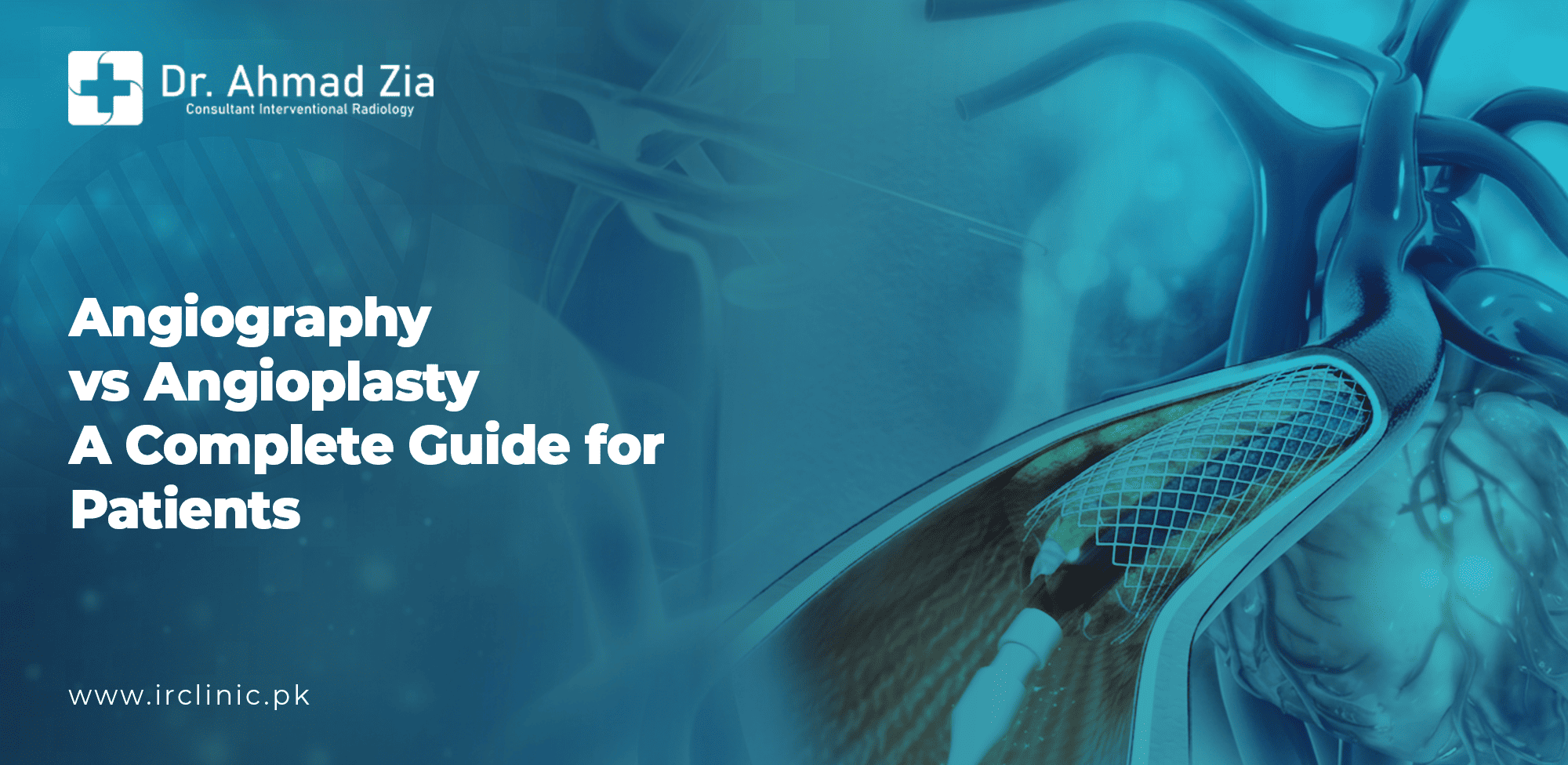
When it comes to heart health, few terms are used as frequently or confused as often as angiography and angioplasty. While they are closely related and often performed during the same hospital visit, they serve two very different purposes in interventional medicine. Simply put, one is a “look,” and the other is a “fix.”
Understanding the differences between angiography vs angioplasty is crucial for any patient preparing for cardiac care, as it clarifies what to expect during the procedure, how long the recovery will take, and how these tools work together to diagnose and treat cardiovascular disease.
IR Clinic offers high-end image-guided vascular and cardiac services under the professional guidance of an interventional radiologist like Dr. Ahmed Zia. The diagnosis and treatment are conducted with a high degree of minimally invasive techniques and patient centered approach.
This article describes each of these procedures step-by-step to ensure that patients have a clear understanding of how they operate, when they are prescribed and their role in cardiovascular and vascular health.
Angiography is a diagnostic imaging procedure that is specialized to scan the state of blood vessels in real time. It enables doctors to identify constriction, obstructions, aneurysms or other irregularities that could impact the blood supply to vital organs.
A thin catheter is carefully placed in one of the blood vessels, typically the wrist or groin, during the procedure. It is followed by the injection of a contrast dye, making the blood vessels visible under X-ray imaging. This is a real-time visualization that assists the doctors in knowing the flow of blood in the arteries and whether there is an obstruction or not.
The angiography is normally performed when patients are awake, but mild sedation is usually given in order to make them comfortable. The operation is normally accomplished in a limited period and does not entail any form of surgical incision. Rather, it uses a small puncture point, and as such, it is a relatively non-invasive and very safe diagnostic procedure.
Angiography is usually prescribed when the patient has a suspicion of coronary artery disease, unexplained chest pain, abnormal heart test results, stroke or slowing of brain circulation or when peripheral artery disease is suspected, leg pain or leg weakness. In short, angiography is an elaborate map of the vascular system that can be used to make additional treatment decisions.
Angioplasty is a type of therapeutic intervention aimed at restoring normal blood flow in the arteries that have grown narrow or clogged. Angioplasty, unlike angiography, is aimed at treating the underlying issue directly as opposed to diagnosis.
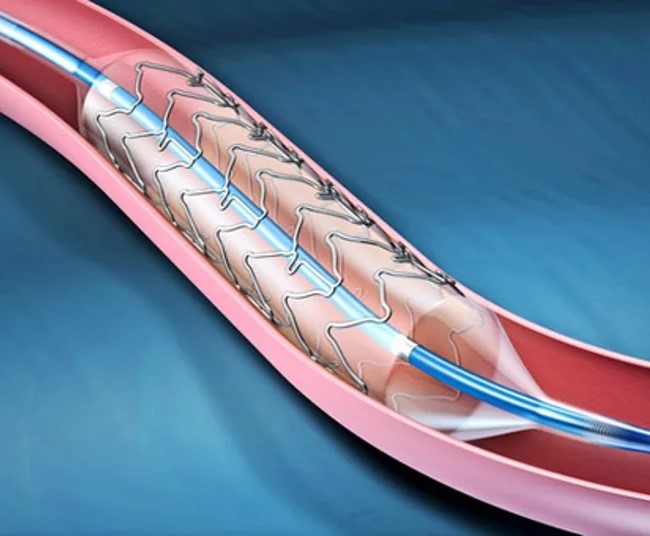
The process is usually done right after angiography in case a large blockage is observed. The artery is narrowed, and a thin balloon catheter is carefully steered to the place of constriction. The balloon is then placed in the right position and inflated to enlarge the blocked area, stretching the blood flow.
In most instances, a small mesh container called a stent is inserted to ensure that the artery remains open in the long-run and minimizes the chances of re-narrowing.
Angioplasty is important in the treatment of coronary artery disease, particularly in patients with chest pain, heart attacks or extreme narrowing of the arteries. It can also be applied in peripheral artery disease, where the situational circumstance is the decrease in circulation of the limbs and movement.
The main aim of angioplasty is to not only alleviate the symptoms but also to avoid severe complications by restoring the necessary oxygen-saturated blood flow to the affected tissues.
Even though these two processes are done in the same way by using the same catheter-based procedures, and they can be done in the same clinical facility, their aim is totally different.
Angiography
It is a purely diagnostic procedure. It assists physicians in locating the exact site and extent of vascular disease. The result of angiography is visual information in the form of detailed images used in clinical decision-making.
Angioplasty
It is a treatment procedure. It is intended to literally open up constricted or obstructed blood vessels and reestablish normal blood flow. Angiography stops at diagnosis, whereas angioplasty goes a step further to rectify the issue.
Angiography
Angioplasty
The use of stents is another significant difference. Angiography does not involve the use of stents since no structural correction is done. However, in angioplasty, stents are often implanted in the artery to keep the artery open and functional in the long term.
Get Expert Care for a Stronger Heart from Dr. Ahmed Zia at IR Clinic and A Minimally Invasive Angioplasty Procedure for A Faster Recovery
Angiography is advised in instances where the symptoms or initial tests indicate the possibility of vascular disease. This diagnostic test may be recommended to patients who have persistent chest pain, breathing that is not explained, or indications of decreased blood flow.
It is also widely applied following abnormal findings of stress tests, ECGs, or imaging studies. Angiography can also be used in neurological cases to assess the decreased blood flow to the brain or to determine the risk of stroke. On the same note, when a person has a peripheral vascular condition, it assists in evaluating the issues with circulation of the limbs.
Angiography assists doctors in identifying when medical therapy is adequate or when interventional therapy is necessary by giving an in-depth internal picture of the vascular system.
Angioplasty is advised when angiography shows that a severe blockage exists, which impedes the normal blood flow. This involves acute constriction of the coronary arteries, persistent chest pain because of decreased blood flow, or emergency cases like a heart attack.
It is also applied in patients who have peripheral artery disease, wherein the limited blood flow results in pain, numbness or walking difficulties. Under these circumstances, it is necessary to restore circulation to avoid prolonged tissue damage.
Angioplasty is determined to be carried out after critical consideration of imaging findings, patient symptoms and general health status. The aim is to select the most effective and safe method of restoring vascular health always.
Angiography and angioplasty are carried out in a special setting referred to as a catheterization laboratory. It starts with local anesthesia at the point of insertion and ensures that the patient does not feel uncomfortable during the procedure.
Angiography involves placing a catheter into the artery; contrast dye is then injected, and real-time imaging is done to see blood flow. The process is completed when the necessary diagnostic data is received.
The process is furthered in angioplasty. Once the blockage has been found, a guidewire is inserted through the constricted artery. Then a balloon catheter is inserted and inflated to dilate the vessel. A stent may be inserted to sustain blood circulation long-term, in case it is needed. The ultimate imaging is done to ensure good restoration of circulation.
The two procedures are closely observed during the procedure to maintain patient safety and accuracy of the procedure.
Angiography and angioplasty are often done simultaneously in a variety of clinical cases. It will enable physicians to initially identify the problem and bypass treatment in case it is necessary.
This combined approach will help minimize delays, risk, and manage better results, especially in cardiac emergencies when time is a vital factor in patient survival and recovery.
Angioplasty and angiography are both minimally invasive and are usually safe when performed by skilled experts. Most patients are able to endure the procedures and only have mild discomfort at the point of access.
The potential risks are slight bleeding, bruising, contrast dye allergy, or short-term impact on the functioning of the kidneys. On uncommon occasions, abnormal heartbeats could be experienced during the operation. Nonetheless, severe complications are not very common, particularly in sophisticated interventional facilities.
Angiography has a rather rapid recovery, and the majority of patients resume their normal lives in a day. Angioplasty might lead to a slow recovery because of medication needs and subsequent treatment. Anticoagulant drugs are generally used to prevent the development of clots, and lifestyle interventions are highly encouraged to sustain long-term outcomes.
At IR Clinic, the advanced imaging technology and modern laboratory system are used in both diagnostic and interventional processes. The clinic adheres to the worldwide recognized standards to maintain accuracy, safety and comfort of the patients.
With the experience of an interventional radiologist, Dr. Ahmed Zia, patients are provided with a personal care plan depending on their condition and diagnostics results. His years of experience in the fields of interventional radiology and vascular surgery enable a specific approach to treatment and the least invasive treatment of complicated vascular pathologies.
Angiography and angioplasty are related terms but have entirely different purposes when it comes to the treatment of vascular and cardiac conditions. One of them offers the much-needed diagnostic clarity, and the other offers life-saving treatment as it restores the blood flow.
Modern practice of interventional medicine has seen many vascular diseases treated without open surgery, which is safer, quicker and has better long-term results.
For individuals experiencing symptoms of vascular disease or requiring expert evaluation, consulting a specialist at the IR Clinic ensures access to advanced, patient-centered care. All procedures are guided by clinical excellence and modern medical technology.