
Bahria orchard Hospital: Mon, Tues, Thurs ⟶ 11 AM, Wed, Fri ⟶ 1:30 PM

Shalamar Hospital: Wed, Fri 10:30 AM

Have Any Questions?

+92 310 7866662

Have Any Questions?

+92 310 7866662

Angioplasty in Lahore

Restore Your Heart’s Health
With Precision Angioplasty in Lahore

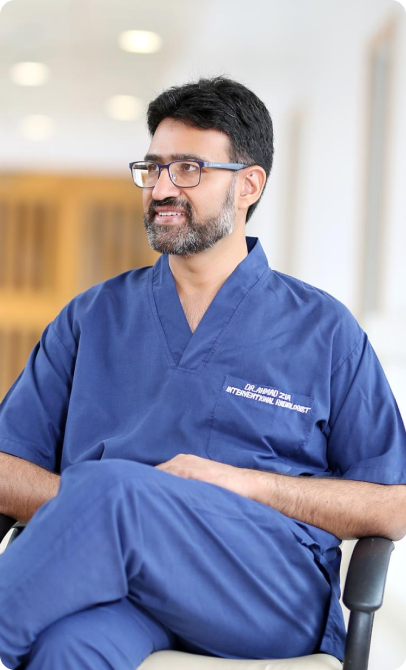
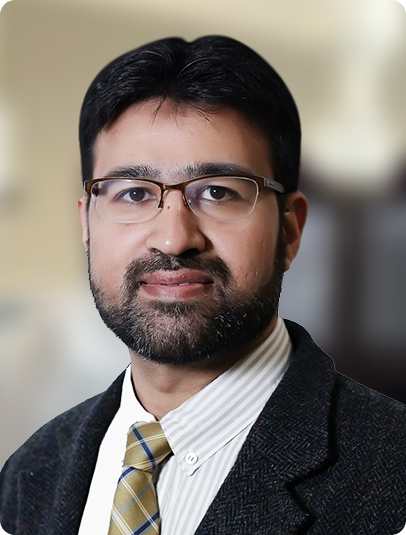
Dr, Ahmad Zia

About Dr. Ahmad Zia

Dr. Ahmad Zia is a Leading Interventional Radiologist & Endovascular Care Specialist. 
He is a famous CCST radiologist, especially known for his minimally invasive image-guided therapeutic procedures in the medical industry. With advanced training from both the national MBBS from Allama Iqbal Medical College and international institutions, including EBIR membership, FRCR (London) certification, and an MRCS (Edin). With recent publications as an active participant in health research, making him a prominent figure in the medical community. 

Dr. Ahmad Zia is now serving as a consultant interventional radiologist at leading hospitals like Shalamar Hospital, Lahore, where he is the director of the cath lab. Apart from that, he is also serving as an associate professor of surgery at Shalimar Institute of Health Sciences, Lahore. His expertise is not limited to pain management, GIT radiology, vascular intervention, and interventional and diagnostic radiology but also to the nonvascular interventions. His specialties are also in cardiac care, angioplasty and stenting, advanced tumor ablations, and embolization procedures.

At the IR Clinic, Dr. Ahmad Zia is known for his patient-centered approach and strong technical expertise, ensuring that every treatment plan prioritizes safety, effectiveness, and patient comfort.


Accreditations & Affiliations

Dr. Ahmad Zia is a well-known expert in Angioplasty in Lahore. He uses modern, minimally invasive techniques guided by precise imaging. He is famous in interventional radiology and offers successful, non-surgical treatments for benign thyroid nodules. His credentials and professional qualifications include:

Patient Reports and Testimonials.

Dr. Ahmad Zia

Why Choose Dr. Ahmad Zia for Angioplasty?

He has unmatched heart health specialized treatment experience.

arrow icon

20+ years of experience

He has treated a vast number of patients in complex vascular interventions.

arrow icon

Higher Treatment Success Rate

He is a specialist trained in targeted, minimally invasive treatment techniques for opening blocked arteries.

arrow icon

Advanced Image-Guided Precision

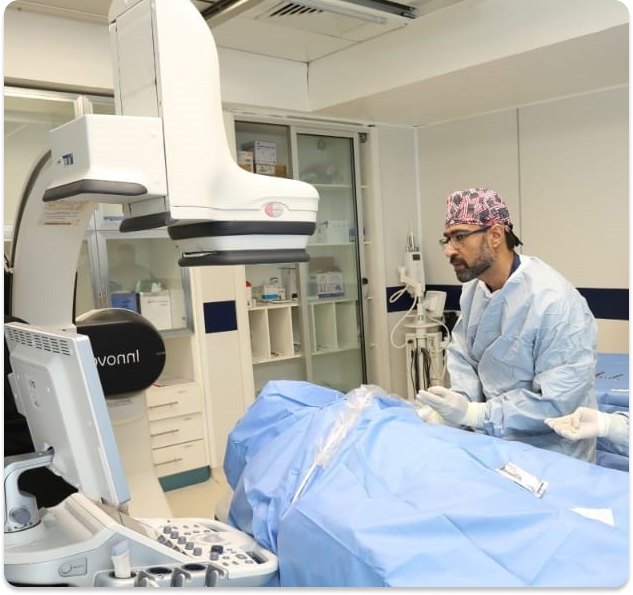
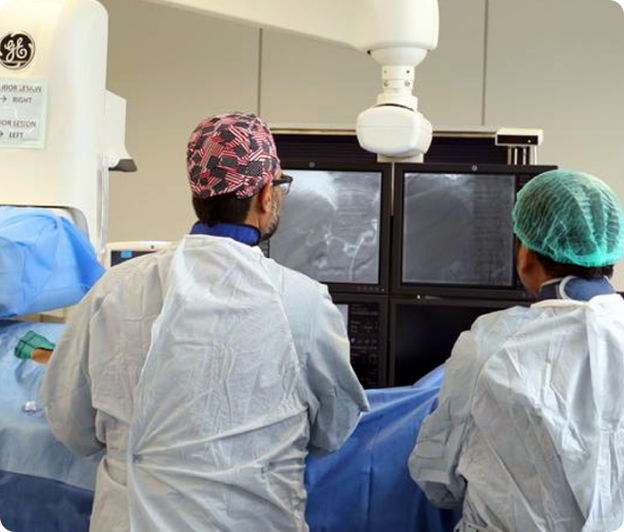
Use of fluoroscopy with real-time X-ray ensures the stent is perfectly placed at a precise location.

arrow icon

Less invasive procedures

No need for large incisions, ensures faster healing of 1-3 days and less scarring on the skin, and a quick return to routine.

arrow icon

Personalized Treatment Of Planning

Every patient has their own medical condition, so special care is taken for specific blockages and health.

arrow icon

Comprehensive care for angioplasty patients

Under one roof, you will get all diagnostic checkups and procedures.

arrow icon

Most Trusted and Reliable Care

Well-known for accurate, reliable, and safe patient care. 

How to Get Treated by Dr. Ahmad Zia?

Your healthy heart journey is quite simple, and this pathway is just a few steps ahead.

step1

Contact &
Consultation

Book an appointment via placing a call or using online WhatsApp for a detailed evaluation

step2

Diagnostic
assessments

Essential heart tests, including angiography, will be performed to accurately identify blocked or narrowed coronary arteries.

step3

Patient
Treatment Plan

Dr. Ahmad Zia will then discuss a personalized plan after assessing the findings for angioplasty or stenting.

step4

Procedure
& Recovery

The procedure will be carried out in a state-of-the-art cath lab, and recovery instructions and planned post-procedure care will follow.

Dr, Ahmad Zia

When Should You See
Dr. Ahmad Zia for Angioplasty?

Recognizing the signs of blocked arteries in the heart or serious
heart blockage is very critical. Immediately go for a consultation and heart stent surgery with Dr. Ahmad Zia if you experience any of these symptoms.

arrow icon

Chest pain

It is also called angina. It occurs under pressure, stress, or exercise.

arrow icon

Short of breath

while doing simple or small tasks, you feel short of breath, making you abnormally tired

arrow icon

Heart Attack Symptoms

When you feel sudden pain or pressure in your chest area. That pain spread to my arm and jaw, and nausea. Or having cold sweat.

arrow icon

Abnormality in Stress Test Results

When your cardiologist finds concerning values in your tests.
Notice Early Detection It Matters

When you go through early symptoms and decide to take action, it will help you prevent a heart attack. These early angioplasty treatments can prevent lateral heart attacks.

It stabilized the plaque in the arteries by stabilizing it, relieving the symptoms dramatically. As a result, blood flow continues smoothly and relieves the symptoms of a heart attack. Not only improving the quality of your heart life but also avoiding damage from future major cardiac events.

Risks Related to
Delayed Angioplasty

Suppose you don’t take immediate action, then. Postponing the angioplasty treatment can do severe harm to your health.

Myocardial Infarction: It’s often known as a heart attack. It results in full heart muscle damage due to complete blockage.

Heart Failure Gets Worse: Gradually, if the early symptoms are overlooked, the heart gets weakened. It will ultimately lead to chronic fatigue or disability in the patient’s body.

Severe or irregular arrhythmias: When the heart doesn’t function normally and gets its arteries blocked by any plaque, it results in irregular heartbeats. This is called arrhythmia and can get severe.

Increased invasive procedure Risk: Delaying will result in ending the safe, noninvasive procedures. That results in more major operational and future interventional risks due to complex blockages.

How is Angioplasty Performed?

Basically, angioplasty is a procedure in which your blocked arteries are opened by the use of a thin catheter. This procedure is carried in well-equiped lab to open the narrowed or blocked coronary arteries. In this process, the patient is given anesthesia, and all the procedures take place at the Cath Lab. A thin catheter is inserted by a puncture into the wrist or groin artery that reaches the heart. A tiny balloon at the catheter’s tip becomes inflatable at a plaque site and compresses the blockage against the wall of the arteries. Then, a very small mesh tube inside the balloon catheter is placed there. It acts as scaffolding, keeping the smooth blood flow to the heart muscles and letting the artery stay wide open.

interventional radiologist

Types of Angioplasty & Stenting

The main technique to keep the already (blocked artery) open is quite similar, yet the variety comes in stenting options.

Balloon
Angioplasty (POBA)

It uses only a balloon to re-narrow the artery, often known as restenosis. It is the primary and rather simpler and commonly used type of angioplasty.

Drug-eluting Stent (DES) Angioplasty

In this method the stent is coated with certain medication that prevents the scar tissue growth inside the artery.  It is slowly released and reduces the risk of restenosis drastically.  Most patients prefer this type, as it doesn’t involve placing a mesh inside the artery.

Bare Metal
Stent (BMS)

It is known as bare metal stent angioplasty treatment. When patients have issues tolerating the long-term antiplatelet drugs. Then this uncoated stent is used in  angioplasty stent surgery. There are varieties of angioplasty stent prices and overall angioplasty cost in Pakistan.

Above-Knee
Angioplasty & Stenting

Blockages in major arteries above the knee, including the femoral and popliteal arteries, are treated with this technique. It enhances circulation, lessens the chance of problems that could endanger limbs, and eases leg pain when walking.

Below-Knee
Angioplasty & Stenting

This treatment, which targets smaller arteries such as the tibial and peroneal vessels, is particularly helpful for patients with critical limb ischemia and diabetes. It promotes wound healing and lowers the risk of amputation by increasing blood flow to the foot and lower leg.

Foot Arch
Angioplasty

It is a very specific method that targets the foot’s plantar and pedal arteries. It helps protect the limb and restore microcirculation, which is especially helpful for individuals with diabetic foot ulcers that are not healing.

Venous Stenting

This technique improves venous blood flow and relieves symptoms like edema, discomfort, skin changes, and venous ulcers. It is used to treat restricted or obstructed veins, most frequently the iliac veins.

CO₂ Angiography

CO₂ angiography is an advanced vascular imaging method that visualizes blood arteries using carbon dioxide rather than iodine-based contrast. Patients with kidney illness or contrast allergies benefit most from it. During angioplasty and stenting procedures, CO2 angiography is frequently utilized to improve safety while preserving accurate arterial imaging.

The best angioplasty in Lahore is a type, which will be recommended by Dr. Ahmad Zia, will synchronize to the type of your blocked artery size, blockage location, and overall health.

Other Advanced Procedures

We offer Other Options than Angioplasty.

Dr. Ahmad Zia’s expertise ranges from cardiac care to beyond dealing with a full spectrum of image-guided intervention.

Thyroid Nodule Ablation

Non-surgical reduction of benign thyroid nodules.

Embolization Therapies

For fibroids (UFE), bleeding, and vascular malformations.

Drainage & Biopsy

Nephrostomy, abscess drainage, and specific image-guided biopsies.

Pain Management

Image-guided shots for spinal and joint pain.

Tumor Ablation

Minimally invasive eradication of tumors in the liver, kidney, and lung using heat (RFA/MWA) or cold (cryoablation).

Vascular Interventions

Dialysis fistula fixing/ repair, varicose vein sclerotherapy, varicocele & prostate artery embolization.

Dialysis Access

PICC Line, Permcath, and Port Catheter Insertion for Chemotherapy or Dialysis.

Interventional Radioloagist

Angioplasty & Stenting in Lahore

Angioplasty at IR Clinic restores blood flow in blocked or narrowed arteries using balloon catheters and stents a safe, minimally invasive alternative to open heart or vascular surgery. Explore our other procedures below.

Our Specialist Services Include:

Frequently
Asked Questions

Is angiography a major surgery?

Not at all. It is a procedure with minimal invasion and incision. A tiny puncture is made to get a fast track and recovery.

Surely, as diabetics are at greater risk of heart diseases. Diabetics get a great benefit from angioplasty. As it restores blood flow, reduces symptoms and prevents future heart attacks.

Not actually. Mild blockages are usually manageable by medications. However, when medications don’t work, then angioplasty is a recommendation for significant blockages of greater than 70 percent of artery blockage.

The angioplasty and stenting procedure itself takes between 30 minutes and 2 hours. However, it totally depends on the number and extent of complex blockages.

It’s very safe. While angioplasty procedures have potential risks, including puncture site bleeding, allergic reaction towards dye, artery damage, restenosis, or stent thrombosis. Dr. Zia takes precautions to minimize these risks.

It doesn’t prevent future surgeries. However, successful and timely angioplasty has eliminated or delayed the need for coronary artery bypass grafting (CABG) surgery.

Call Now Button