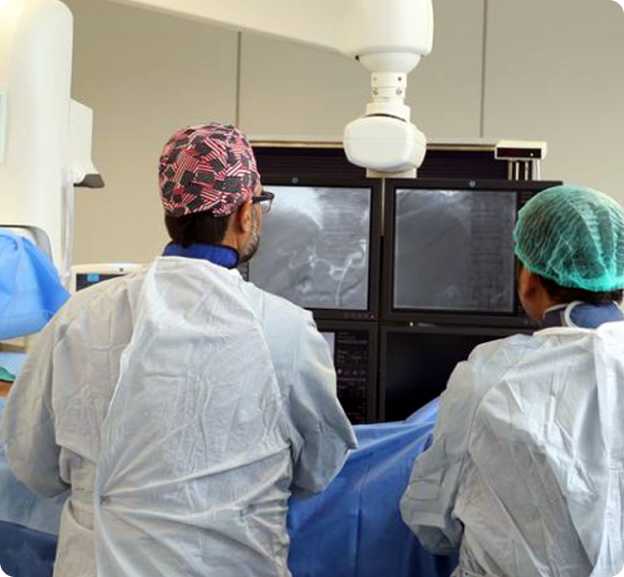
Minimally Invasive
Liver Tumor Treatments With
Advanced TACE & Y-90
- Advanced TACE & Y-90 Radioembolization
- No Major Surgery | No Large Cuts
- Suitable for Liver Cancer & Inoperable Tumors
- Improves Survival & Quality of Life
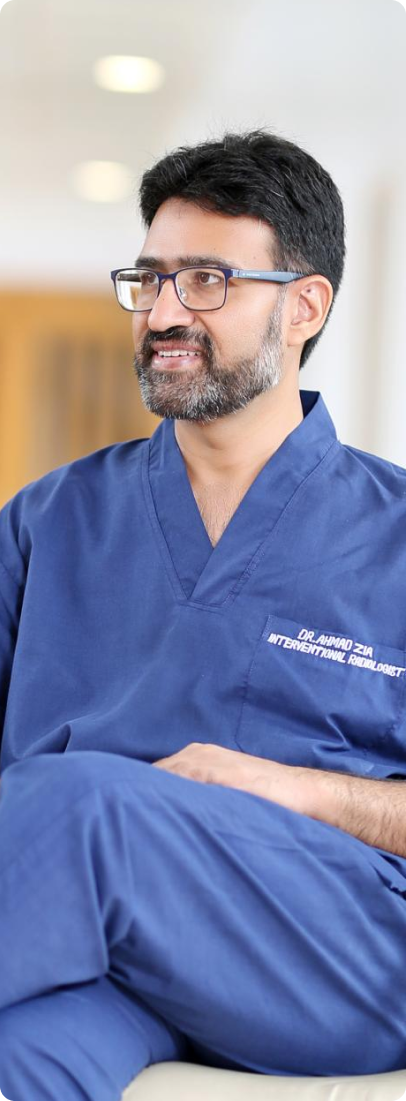
About Dr. Ahmad Zia
Dr. Ahmad Zia is a leading diagnostic and interventional radiologist at IR Clinic. He specialises in minimally invasive treatments for liver tumors, using advanced image-guided techniques. His expertise includes Transarterial Chemoembolization (TACE) and Y-90 radioembolization. These procedures target tumors effectively while preserving healthy liver tissue.
Dr. Ahmad Zia has over 20 years of clinical experience in Pakistan and the United Kingdom. He underwent further postgraduate study in radiology after earning his MBBS from Allama Iqbal Medical College in Lahore. The European Board of Interventional Radiology (EBIR), which reflects European standards of competence in interventional radiology, and the Fellowship of the Royal College of Radiologists (FRCR), London, are two of his esteemed worldwide credentials.He has held positions as an Honorary Consultant at Imperial College London and a Consultant at Nottingham University Hospitals, where he developed a thorough understanding of difficult liver therapies.
Dr. Ahmad Zia now works as a Consultant Interventional Radiologist and Associate Professor of Radiology at Shalamar Hospital in Lahore. He has held senior leadership positions in Pakistan, including Chairman of Radiology at the Pakistan Kidney & Liver Institute (PKLI). TACE, Y-90 radioembolization, image-guided tumor ablation, vascular treatments, and the management of complex liver and renal disorders are among his clinical specialties. Dr. Ahmad Zia is dedicated to providing patients with liver tumors with safe, effective outcomes by combining cutting-edge technology with caring assistance.
Badges, Accreditations and Certifications
Dr. Ahmad Zia’s certifications reflect years of hands-on experience, advanced training, and a strong commitment to patient care. Each qualification represents recognised international standards in interventional radiology and oncology. These credentials reassure patients that their treatment is guided by proven knowledge, modern techniques, and trusted clinical expertise, ensuring safe and effective care using minimally invasive approaches.

ECIO
European Certificate of Interventional Oncology (2025)

EBIR
European Board of Interventional Radiology (2014)
CCST
Interventional Radiology 2014

Certified Consultant
College of Physicians & Surgeons Pakistan

CCST
Diagnostic Radiology 2014

Cath Lab Director
Cath Lab Director, Shalamar Hospital, Lahore
FRCR
Fellow of Royal college of radiologists, London (2013)

MRCS
Member of Royal College of Surgeons, Edinburgh (2006)
Interventional Radiology
Member of Society of Interventional Radiology
MBBS
Allama Iqbal Medical College, Lahore (2002)
Patient Testimonies About Dr. Ahmad Zia
TehreemTrustindex verifies that the original source of the review is Google. My son was diagnosed with varicocele, and different surgeons advised an operation. As a mother, I was deeply worried about complications and future fertility. That’s when we understood the importance of an interventional radiology clinic where treatment is done without surgery. We met Dr. Ahmad Zia, who is known as a leading interventional radiologist in Lahore, and he guided us toward embolization. We also explored options at Bahria International Hospital Orchard for convenience. Alhamdulillah, the procedure was simple, and my son recovered within days. No pain, no stress. Every parent looking for a safer option should consult him. rohi shahTrustindex verifies that the original source of the review is Google. My younger sister had been suffering from internal bleeding issues, and multiple doctors were suggesting open surgery. As a family, we were terrified because of the risks and long recovery. That’s when we realized the real need for an interventional radiologist in Lahore, someone who could treat the problem without major surgery. We consulted Dr. Ahmad Zia at Bahria International Hospital, Orchard got guidance regarding facilities. From the first meeting, he explained how interventional radiology clinic treatments work through minimally invasive techniques. The procedure was done without any major incision, and my sister was discharged quickly. Today, she is healthy again. This field truly saves patients from unnecessary surgeries, and Dr. Ahmad Zia is doing an incredible job. Mariyam MahmoodTrustindex verifies that the original source of the review is Google. My mother needed a procedure for a serious condition, but due to her age, surgery was very risky. That’s when we understood why patients specifically search for an interventional radiologist in Lahore—because they want safer alternatives. Dr. Ahmad Zia treated her through a minimally invasive technique. The care, patience, and clarity he showed were beyond expectations. Facilities like Bahria International Hospital Orchard also make access easier for families like ours. Alhamdulillah, my mother is doing well now. Afiza MalikTrustindex verifies that the original source of the review is Google. My husband was dealing with a liver tumor, and doctors were suggesting high-risk surgery. We were emotionally broken. At that time, we came to know why interventional radiology in Lahore is so important—it offers targeted treatment without putting the whole body under stress. Dr. Ahmad Zia explained everything about image-guided procedures in such a calm way. Advanced medical facilities at Bahria International Hospital Orchard, his approach is very professional. My husband underwent treatment and is now recovering well. For families going through such situations, this kind of care is priceless.Google rating score: 5.0 of 5, based on 4 reviews
Why Select Dr. Ahmad Zia to Treat Liver Tumor?
People prefer the services of Dr. Ahmad Zia for expert care and sophisticated Minimally Invasive Interventions. He is renowned for:
International Treatment Protocols
Adheres to the international best practices.
Multidisciplinary Cancer Team
Form of all-encompassing expert treatment.
Step-by-Step Instructions
Easy and accessible instructions.
Contemporary Cath Lab & Newest Technology
New facilities.
Only Tumor Treatment
Attacks on the locations of the tumor.
Easy Check-Ups & Long-term Monitoring
Guarantees long-term health.
Pre and Post Procedure Support Before,
During and After Procedure
Ongoing patient care.
Surgical Choice in Elderly and
Weak patients with Minimal risk
Low risk.
Practical Effects in the treatment of liver tumor
High success rate.
Experts in TACE & Y-90 Therapy
Advanced intervention skills.
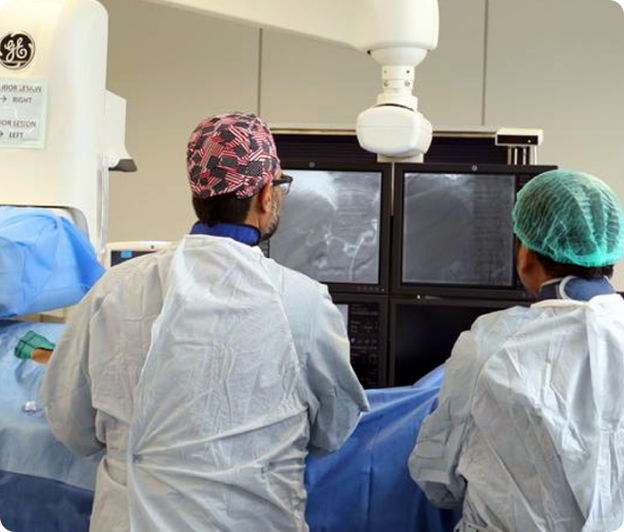
How To Get Treatment From Dr. Ahmad Zia?
The 5-Point Liver Tumor Care Process.
Consultation & Report Review
Meet Dr. Ahmad Zia to review scans and reports.
Imaging & Diagnosis
Advanced imaging verifies tumor type, size, and location.
Individualized Treatment Plan
A choice to be made between TACE and Y-90, depending on the state of affairs.
Minimally Invasive Therapy
Minimally invasive treatment without open surgery.
Follow-Up and Recovery Care
Long-term monitoring of health.
Liver tumors may cause several symptoms that should be reported to the clinician.
The faster it is identified, the better it is; it is essential to be informed about the indicators. The symptoms may be mild signs of discomfort to various warning signs of advanced disease.
Symptoms of Liver Tumors
There are many symptoms that are common, such as:
Constant pain in the abdomen
Ongoing discomfort on the upper right side of the abdomen.
Abdominal bloating or swelling
Caused by fluid buildup or an enlarged liver.
Unexplainable loss of weight
Weight loss without changes in diet
or lifestyle.
Loss of appetite
Feeling full quickly or reduced desire
to eat.
Unremitting dizziness or weakness
Ongoing tiredness or low energy levels.
Nausea or vomiting
Recurrent stomach upset without a clear cause.
The Warning, Progressive or Advanced Symptoms.
Jaundice
Yellowing of the skin and eyes due to liver dysfunction.
Dark urine
Urine appears darker as liver function declines.
Pale or clay-colored stools
Indicates impaired bile flow.
Itchy skin
Persistent itching caused by bile buildup in the body.
Infection-free fever
May signal inflammation related to liver disease.
Leg or ankle swelling
Fluid retention due to
reduced liver function.
Easy bruising or bleeding
Results from impaired blood clotting.
When to See a Specialist?
If the symptoms last a few days or they begin to intensify, it’s
time to see a doctor right away. Moreover, if the swelling persists
or keeps getting worse, book an appointment with a specialist.
If yellowish eyes develop.
Gentle Reassurance
A lot of liver tumors can be treated when they are noticed in
their early stages through procedures that are minimally invasive, such as TACE and Y-90 therapies.
What If You Don't Treat Your Liver Tumor Timely?
Untreated liver tumors can lead to serious health complications over time. Early diagnosis and timely treatment are crucial to prevent the disease from progressing. If left untreated, the following complications can occur:
Tumor Growth
Without treatment, liver tumors keep growing. Therapy is ineffective because larger tumors are difficult to target with minimally invasive techniques or remove surgically.
Spread to Other
Organs (Metastasis)
Other body parts, such as the brain, bones, or lungs, may develop liver cancer. Treatment becomes even more difficult when metastases occur, and survival rates are said to be lower.
Liver Functional destruction
Reduced Survival Time
When treatment is administered promptly, life expectancy can be considerably raised. In addition to decreasing the chances of success, procrastination may prevent the patient from leading a full and active life.
Complications
If left untreated, liver tumors raise the risk of serious side effects such internal bleeding, ascites (a buildup of fluid in the abdomen), or possibly fatal infections. These issues deteriorate overall health and complicate subsequent treatment.
Severe Symptoms
If left untreated, liver tumors typically cause worsening symptoms, such as persistent discomfort, edema in the abdomen, jaundice (yellowing of the skin and eyes), nausea, and weakness. On a daily basis, these symptoms drastically reduce their comfort and quality of life.
Limited Treatment Choices
Early-stage liver tumors typically respond to less invasive treatments such as Y-90 radioembolization or TACE (transarterial chemoembolization). In more severe cases, these procedures may no longer be viable, leaving only the more invasive and risky options of systemic chemotherapy or surgery.
The Treatment of
Liver Tumors With TACE
TACE, or transarterial chemoembolization, is a targeted, minimally invasive procedure. Its purpose is to safeguard healthy liver tissue while managing liver cancers. An interventional radiologist performs the procedure by guiding a tiny catheter to the hepatic artery through the blood arteries.
The hepatic artery supplies blood mainly to the tumor. Following that, a large dose of chemotherapy is sent straight into the tumor. In doing so, the medication can lessen its adverse effects on the rest of the body while acting where it is most required.
Embolic drugs are utilized to obstruct the artery supplying the tumor following the administration of chemotherapy. In this step, the anti-cancer medications are trapped inside the tumor and its blood supply is cut off, depriving it of the nutrition and oxygen it needs to thrive.
Through the portal vein, blood is still delivered to the healthy portion of the liver, maintaining overall liver function. TACE efficiently slows tumor growth, decreases tumor size, and helps patients with liver cancer who are experiencing symptoms by combining direct chemotherapy delivery with blood flow blockage.
TACE, Y-90 & Ablation by Dr. Ahmad Zia
Liver Tumor Treatment at IR Clinic uses targeted, image-guided therapies like TACE and Y-90 Radioembolization destroying tumors while preserving healthy liver tissue. Explore our other minimally invasive procedures below.
Our Specialist Services Include:
Liver Tumor Treatment-Minimally Invasive vs. Conventional Procedures
| Feature / Aspect | Minimally Invasive Procedures | Conventional Surgery |
|---|---|---|
| Incisions | Small or no incisions | Large surgical cuts |
| Pain & Recovery | Reduced pain, faster recovery | More pain, longer recovery |
| Complication Risk | Lower risk of bleeding, infection, or liver damage | Higher risk of complications |
| Therapy Type | Targeted therapy focused on the tumor | Systemic impact, removes surrounding tissue |
| Hospital Stay | Usually outpatient or short stay | Several days to weeks |
| Scarring | Minimal or barely visible | Prominent surgical scars |
| Eligibility | Best for early-stage or localized tumors | Often required for advanced or complex tumors |
| Precision | Focuses on tumor, sparing healthy liver tissue | Removes tumor with some surrounding tissue |
| Recovery Time | Quick return to normal activities | Extended recovery and rehabilitation |
| Repeatability | Can often be repeated if the tumor recurs | Limited; repeat surgery is more challenging |
Other Procedures We Offer
The therapies provided by Dr. Ahmad Zia are primarily less invasive and guided by images. He ensures precise delivery of the treatment, and patients benefit from a short recovery time.
Every procedure is done using advanced technology to ensure high safety and accuracy.
Liver, Kidney, and Lung Tumor Ablation.
Treatment involving the destruction of tumors with minimal invasion, employing heat, cold, or radiofrequency.
Thyroid Nodule Ablation
Treatment through a non-surgical procedure that is safe and removes thyroid nodules or holds them down.
Angioplasty & Stenting
Opens narrowed vessels to restore blood flow using Angioplasty.
Dialysis Fistula Venoplasty and Stent.
Maintains effective flow in AV Dialysis Fistula.
Fibroid Embolization
Reduces fibroids by blocking blood supply through Fibroid Embolization.
Varices Sclerotherapy
Inserts a solution to seal abnormal veins, avoiding bleeding.
Varicocele Embolization
Treats enlarged scrotal veins with Varicocele Embolization.
Prostate Artery Embolization.
Shrinks the size of the prostate by obstructing blood circulation to relieve urinary symptoms.
PICC Line, Permcath, and Port Insertion.
Safe vascular access is used to allow access to long-term medication or fluid administration.
Stent Placement and Nephrostomy.
Urinates to relieve blocked kidneys in order to normalize the functionality of the kidneys.
Biopsy & Drainage Procedures
Accurate diagnosis supported by image-guided Biopsy Test.
Thrombectomy Procedures
Pushes blood clots out of the veins or arteries to allow blood to flow again.
Image-Guided Pain Injections.
Exact injection therapy with the least risk to treat chronic pain.
Frequently
Asked Questions
What are typical symptoms of liver tumors?
The typical symptoms are abdominal pain or discomfort, jaundice (yellowing of the skin and eyes), fatigue, and swelling in the abdomen. In some cases, early-stage tumors can have no symptoms; hence, frequent check-ups are necessary.
What diagnostic tests are necessary in imaging?
The imaging tests that usually diagnose the condition include ultrasound, CT scan, MRI, or even PET- CT in order to be able to accurately locate the tumor and determine its size and spread.
Is TACE or Y -90 safe in elderly patients?
Yes. These are minimally invasive procedures that can, in most cases, be safe for older patients when adequate evaluation and post-operative monitoring are undertaken.
Is it possible to perform TACE/Y 90 in cirrhotic patients?
Yes. Cirrhotic patients can be treated in a personal manner. Liver functioning is done with care so that the procedure can be safe and effective.
What is the duration of the process?
The majority of the procedures are around 1-2 hrs. Numerous patients are allowed to come home the same day, based on their general health condition and receptiveness to treatment.
Could such treatments cause harm to normal liver tissue?
The risk is minimal. This group of therapies is targeted in nature and targets the tumor to leave the rest of the healthy liver tissue.