Bahria orchard Hospital: Mon, Tues, Thurs ⟶ 11 AM, Wed, Fri ⟶ 1:30 PM
Shalamar Hospital: Wed, Fri 10:30 AM
Have Any Questions?
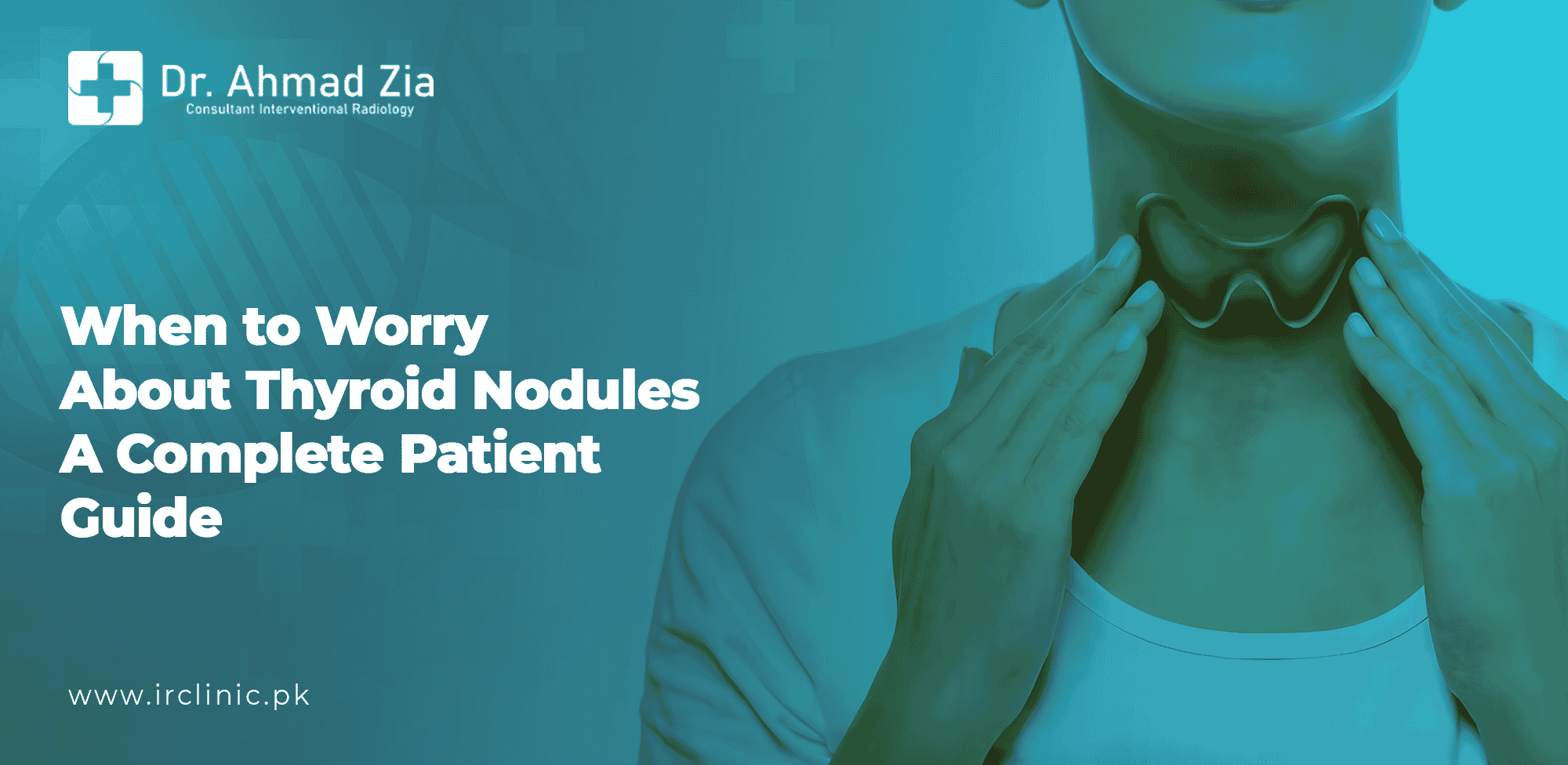
Imagine finding a growth in the neck during one of the usual visits to a doctor. In many situations, having been diagnosed with a “thyroid nodule” creates significant fear and concern. Patients immediately begin wondering whether it means they have cancer.
They also think about whether it will require thyroid nodule ablation, surgery, or whether it is dangerous in some way. This awareness that something is growing right next to their windpipe is frightening.
While this fear is completely understandable, patients should not get too panicked. It is critical to understand that these small growths occur often enough, even amongst older individuals, and the vast majority of them are entirely harmless.
However, there are also some circumstances that must be considered by the doctor and their patient. In order to do that, one needs to know more about those symptoms that cannot be overlooked.
The IR Clinic is a place where patients can find out whether their nodules are harmless or harmful. Dr. Ahmad Zia expertly diagnoses the nodules through advanced techniques and performs effective thyroid nodule treatment in Lahore. This article is going to provide you with information on when to worry about thyroid nodules and when treatment is needed.
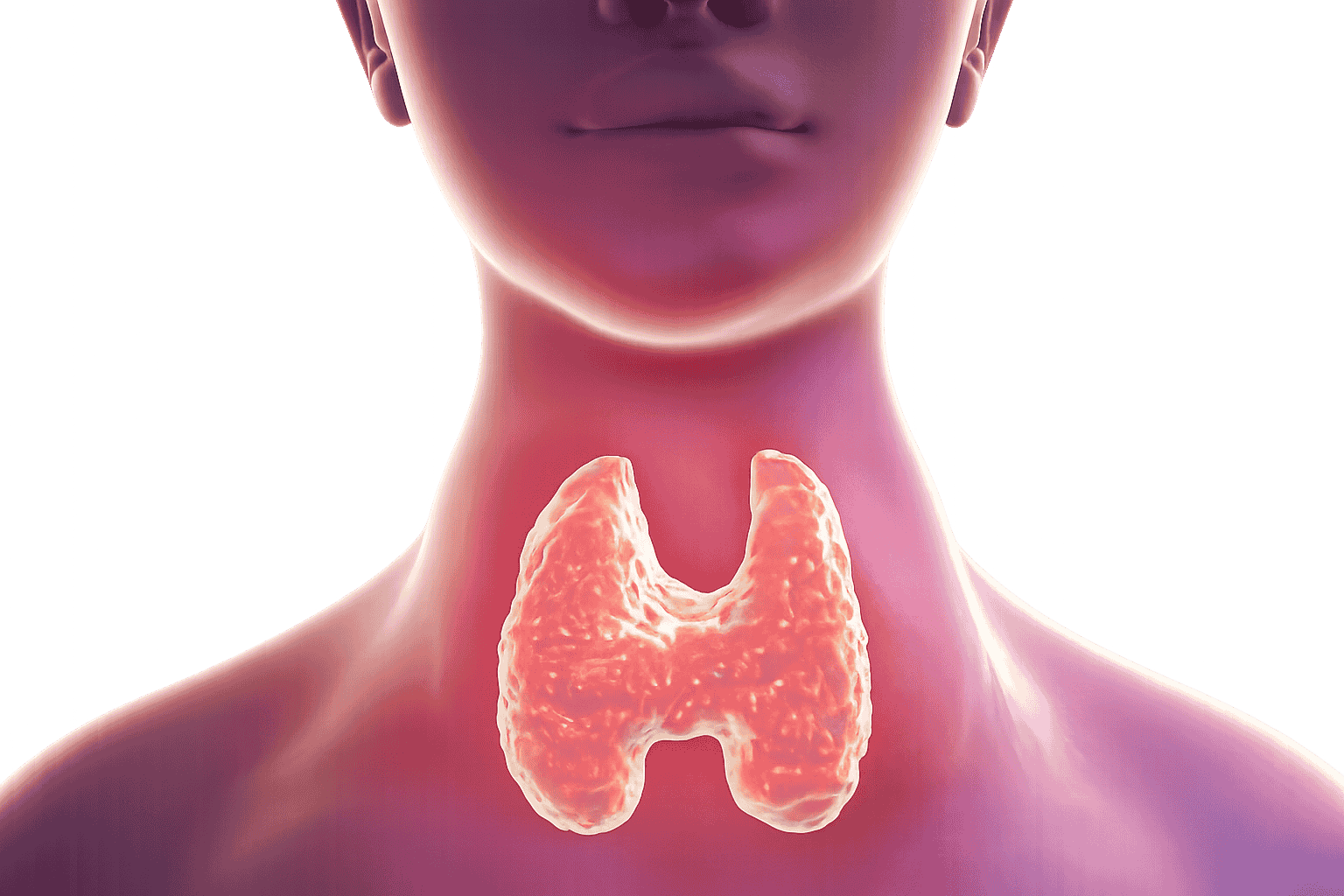
The thyroid is a small gland, located just under the larynx, shaped like a butterfly in the neck region of the body. However, despite being small in size, it is considered the primary controller and generator of vital hormones that control all sorts of functions. These typically range from the regulation of the heartbeat to energy consumption and the metabolism of food.
The thyroid can sometimes become problematic due to the development of some kind of growth within the thyroid gland. This growth becomes a small lump called a thyroid nodule, which could consist solely of a lump, of cystic nature, or of mixed composition.
Statistics reveal that close to half the population above the age of 60 develops a thyroid nodule at some point, although most people never know about it in their lifetime. What is even more surprising is the fact that most of the nodules are harmless in nature, constituting almost 90% of total thyroid nodules.
Therefore, patients should not worry about thyroid nodules in most cases. A person may have a single nodule or multiple nodules. Many thyroid nodules are discovered accidentally during:
Thyroid Nodule Ablation by Dr. Ahmad Zia
Get Expert Diagnosis and Advanced Treatment at IR Clinic, Lahore
Statistical chances of having harmful nodules clearly favor the patients; yet, some lumps need medical assessment. Knowing how to detect them early is important, as this can save lives. Physicians assess certain bodily signs, nodule sizes, and characteristics under ultrasound to determine the urgency of a particular lump.
The majority of benign lesions will be completely asymptomatic. But if a mass starts putting physical pressure on the sensitive structures located near the windpipe and food pipe, it could cause obvious signs that are problematic for an individual. It is recommended to visit a doctor if a person experiences:
This means that a person notices that a lump is growing or enlarging with time, which happens within weeks or months.
This means that the patient is having persistent voice problems (raspy, loss of voice control) that do not disappear after several weeks.
A continuous feeling of a “lump in the throat,” choking on solid foods, or breathing difficulties while lying down.
Persistent pain that is felt at the front of the neck and occasionally extends to the ears.
Size is a significant factor in how doctors manage a nodule. Any lumps that have a diameter of less than 1 cm are usually not considered serious unless they appear extremely suspicious upon a medical imaging test. When solid tumors reach a diameter of more than 1 to 1.5 cm, patients should worry about thyroid nodules.
Specialists normally advise patients to undergo further examination by conducting a procedure known as a fine needle aspiration (FNA) biopsy, in which small amounts of cells are examined. Any tumors that are larger than 3 to 4 cm are definitely treated aggressively since the size itself can put pressure on the airway.
Ultrasound is the strongest tool used in assessing any thyroid lesion. An ultrasound makes it possible to study the internal structure of the nodule and determine if it is risky or not. The table below mentions some low to high-risk features of a nodule:
| Low-Risk (Reassuring) Features | High-Risk (Suspicious) Features |
|---|---|
| Completely Cystic: Filled entirely with fluid; almost always 100% benign. | Solid Composition: Made entirely of dense tissue cells without fluid pockets. |
| Smooth, Clear Borders: A distinct, well-defined edge that sits neatly within the gland. | Irregular or Infiltrative Margins: Fuzzy, jagged, or blurry edges that seem to blend into surrounding tissue. |
| Isoechoic or Hyperechoic: The nodule looks shaded similarly to or lighter than normal thyroid tissue. | Hypoechoic Appearance: The lump appears much darker than the surrounding healthy tissue on the screen. |
| Wider Than Tall: The growth spreads out horizontally along the natural contours of the neck. | Taller Than Wide: The mass grows vertically, pushing forward or backward against tissue layers. |
| No Calcifications: Clean internal tissue without any gritty mineral deposits. | Microcalcifications: Tiny, bright white specks of calcium scattered inside the nodule, often acting as a footprint for abnormal cellular activity. |
If patients worry about thyroid nodules due to any of the risk factors listed above, the specialist will advise the patient toward a definitive diagnosis. Most often, the path starts off with simple blood tests to find out the hormone levels within the thyroid gland.
If blood tests are normal, while an ultrasound reveals a solid lump measuring more than 1 cm, then a doctor will do an FNA biopsy. Usually, most biopsy tests produce negative results. For many years, if a nodule became big enough to cause some sort of deformation or even make swallowing difficult, its removal via surgical intervention has been a common practice.
However, apart from being rather invasive, surgery can cause serious complications such as a life-long hormone replacement therapy and visible scars on the neck area.
Thankfully, medicine has come a long way. These days, individuals who suffer from symptomatic, large, or proliferating benign nodules have a revolutionary, minimally invasive technique available called Thyroid Nodule Ablation.
Getting to know the fact that you have a thyroid nodule can be frightening for one. But it is important to know that one should not be afraid because most thyroid nodules are harmless and never pose any danger to one’s life. The warning signs that require you to see a doctor should be remembered, and one must immediately go see an expert on the condition.
Timely diagnoses will help ensure that patients are able to access appropriate treatment as necessary. If you are experiencing symptoms of a thyroid nodule or have been diagnosed with a benign thyroid nodule, you no longer have to rely solely on traditional surgery. Thyroid Nodule Ablation offers a safe, effective, and minimally invasive solution that can help relieve symptoms while preserving thyroid function and minimizing recovery time.
At the IR Clinic, Dr. Ahmad Zia utilizes advanced image-guided techniques to provide personalized care and optimal treatment outcomes. Don’t let thyroid nodules affect your comfort, confidence, or quality of life. Schedule a consultation today to discuss your condition and discover whether Thyroid Nodule Ablation is the right treatment option for you.