Bahria orchard Hospital: Mon, Tues, Thurs ⟶ 11 AM, Wed, Fri ⟶ 1:30 PM
Shalamar Hospital: Wed, Fri 10:30 AM
Have Any Questions?
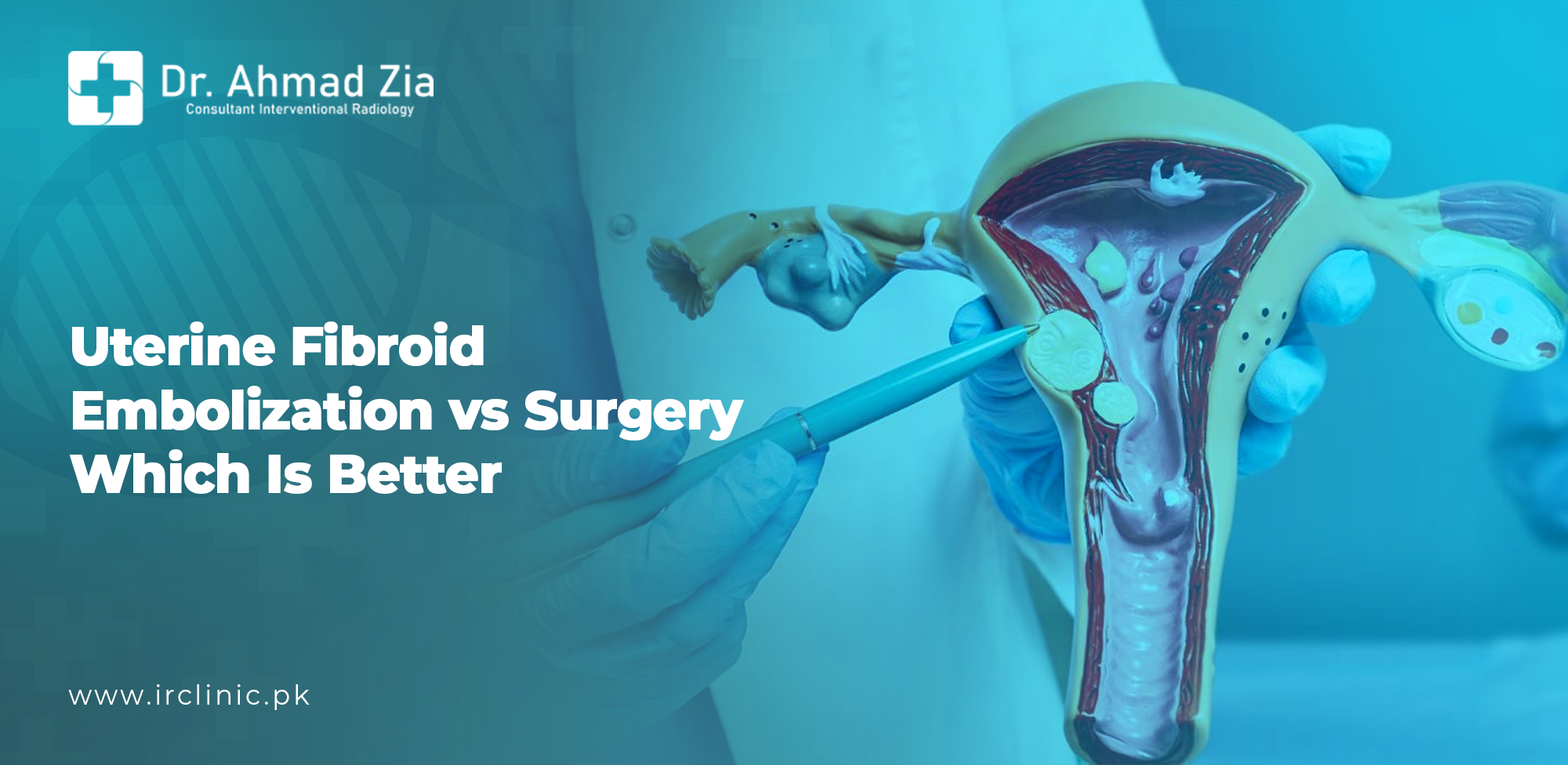
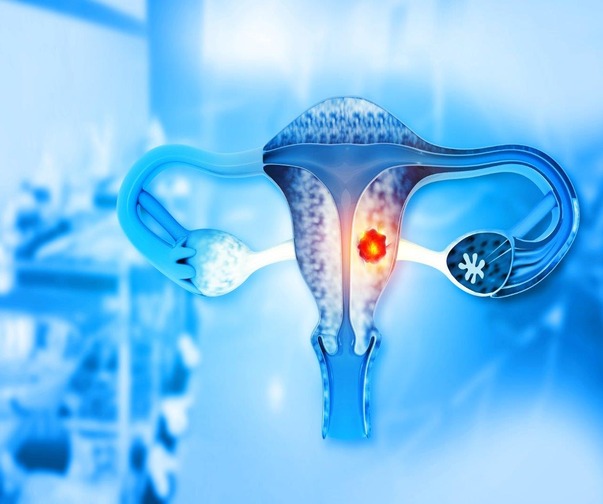
One of the most common benign growths in women in their reproductive years is that of the uterine fibroids. Even though some of them may be mild or without any symptoms, others can have a colossal impact on daily life with heavy menstrual bleeding, pelvic pain, bloating and even fertility issues. Upon the need to treat patients with uterine fibroids, they are usually presented with a big choice: uterine fibroid embolization (UFE) or surgery.
The two approaches are aimed at improving both the symptoms and the quality of life, but are vastly different in regards to approach, recovery, and long-term impact. These are some of the key differences that one should be aware of to make the right decision.
At IR Clinic, Dr. Ahmed Zia offers a breakthrough for women seeking relief from uterine fibroids without the need for invasive surgery. The Uterine Fibroid Embolization (UFE) is a safer alternative to traditional surgery with significantly less downtime and no surgical scarring.
By combining clinical precision with a patient-centered focus, he ensures that every woman receives a treatment plan tailored to her recovery and long-term wellness. The goal is simple: helping you return to your daily life faster, healthier, and pain-free.
This article explains well the differences between uterine fibroid embolization vs surgery for your completed understanding.
Common Symptoms Include:
Long or excessive menstrual bleeding.
Pain or soreness in the belly.
Frequent urination
Lower back discomfort
Difficulty in getting pregnant in some instances.
Fibroids do not always require treatment, although when they become disruptive, they must be treated.
Uterine Fibroid Embolization is an image-guided procedure that is minimally invasive and is done by an interventional radiologist. UFE is not the surgical excision of fibroids, but rather cutting off their blood supply.
It consists of the insertion of a tiny catheter via a small puncture, usually in the wrist or the groin, and into the uterine arteries. A procedure is then carried out to block off the fibroids by injecting tiny particles that block the blood flow in the blood vessels. Symptoms get better when the fibroids reduce in size with time.
This procedure is done at the IR Clinic under the supervision of Dr. Ahmad Zia, a highly qualified consultant interventional radiologist who has international qualifications such as FRCR (London), MRCS (Edin) and EBIR membership.
The Major Strengths of UFE:
No cuts or stitches.
Uterus remains intact.
Short hospitalization (frequently same or next day discharge).
Quicker recuperation than surgery.
Minimal scarring (just a small hole of puncture).
Good bleeding and pain reduction.
Get Advanced UFE Treatment: No Surgery, No Scars, and A Quick Recovery
Meet Dr. Ahmed Zia, An Interventional Neurologist in Lahore from IR Clinic
Myomectomy is a procedure whereby fibroids are excised, and the uterus is spared. It is generally advised to women who intend to bear children in the future or cannot bear to lose their uterus.
The operation may be performed as open surgery, laparoscopy or hysteroscopy depending on the location of the fibroids and their size. It assists in alleviating such symptoms as heavy bleeding and pain, yet fibroids may recur occasionally.
A hysterectomy is a surgical procedure where the whole uterus is removed. It is said to be a lasting solution since fibroids cannot recur after the uterus is removed.
It is commonly recommended to women who have a severe set of symptoms or in situations when other treatment options are not appropriate.
However, it is a major surgery, and recovery takes longer; it also means pregnancy is no longer possible.
| Uterine Fibroid Embolization | Surgery |
|---|---|
| UFE is the least invasive and does not involve huge incisions. It tends to be more desirable to patients who want a less aggressive treatment. | Surgery, open myomectomy or hysterectomy, is a procedure that includes incisions, stitches and can even cause more physical trauma to the body. |
| Uterine Fibroid Embolization | Surgery |
|---|---|
| The majority of patients are able to resume normal activities in 7-10 days. | Depending on the procedure, it may take 46 weeks or even more to recover. |
| Uterine Fibroid Embolization | Surgery |
|---|---|
| The only side effect that is common in the few days after UFE is mild cramping, which can be managed with medication. | Surgery has a higher post-operative pain and needs more intense pain management. |
| Uterine Fibroid Embolization | Surgery |
|---|---|
| UFE preserves the uterus. It is becoming popular among women seeking a non-surgical, but uterus-sparing procedure without significant surgical intervention. | Myomectomy is also one that preserves the uterus. Hysterectomy is the complete removal of the uterus. |
| Uterine Fibroid Embolization | Surgery |
|---|---|
| UFE causes progressive shrinkage of fibroids in weeks to months. It does not instantly eliminate fibroids; it merely cuts off their blood supply, resulting in them gradually shrinking and the symptoms gradually improving over time. | Surgery offers instant removal of fibroids. Surgical therapy eliminates fibroids immediately in the uterus and provides a rapid alleviation of the symptoms after the process of recovery. |
Want to avoid surgery
Prefer shorter recovery time
Have multiple fibroids
Are not planning an immediate pregnancy (case-dependent)
Experience heavy bleeding or pressure symptoms
A detailed medical evaluation is always necessary before selecting the most appropriate treatment plan.
Fibroids might not necessarily lead to immediate complications, but when left untreated, symptoms may evolve over time and become more complicated to treat.
Early consultation saves more treatment options and enables safer, more efficient management procedures like uterine fibroid embolization.
There is no standard answer. The most desirable alternative is based on personal health, symptoms, age, fertility aspirations, and personal choice.
Surgery can be chosen in case of urgent removal, and if the ultimate treatment is the priority.
Unless uterine preservation, faster recovery and minimum invasiveness are the priorities, UFE is usually the superior option. For many patients today, UFE represents a modern shift toward safer, less invasive gynecological care.
The treatment of uterine fibroids has changed drastically with time. Although surgery has traditionally been the remedy, uterine fibroid embolization is currently providing a very viable uterus-sparing alternative with the lowest downtime.
At IR Clinic, patients receive expert evaluation and advanced care designed to prioritize comfort, safety, and long-term well-being. Modern interventional radiology solutions are available to women with the expertise of Dr. Ahmed Zia and can change the quality of life in women, even without undergoing major surgery. When fibroid symptoms are impacting everyday life, early consultation could really make a difference in determining the most appropriate treatment route.