Bahria orchard Hospital: Mon, Tues, Thurs ⟶ 11 AM, Wed, Fri ⟶ 1:30 PM
Shalamar Hospital: Wed, Fri 10:30 AM
Have Any Questions?
The idea of having a “biopsy” done by a physician is not always welcome news. Patients become nervous, although there is no need for panic.
A biopsy test is a process whereby a physician takes a piece of tissue from the patient in order to analyze it under a microscope. With this testing, physicians can learn more about what is happening inside the body and not guess from symptoms alone.
Several procedures can be applied to take tissue samples from the organ, depending on the nature of the abnormal tissue, such as its size, position, and depth.
Incisional and excisional biopsies are two of the most common techniques used by physicians today. Although both aim to achieve the same goal, they differ in their methods.
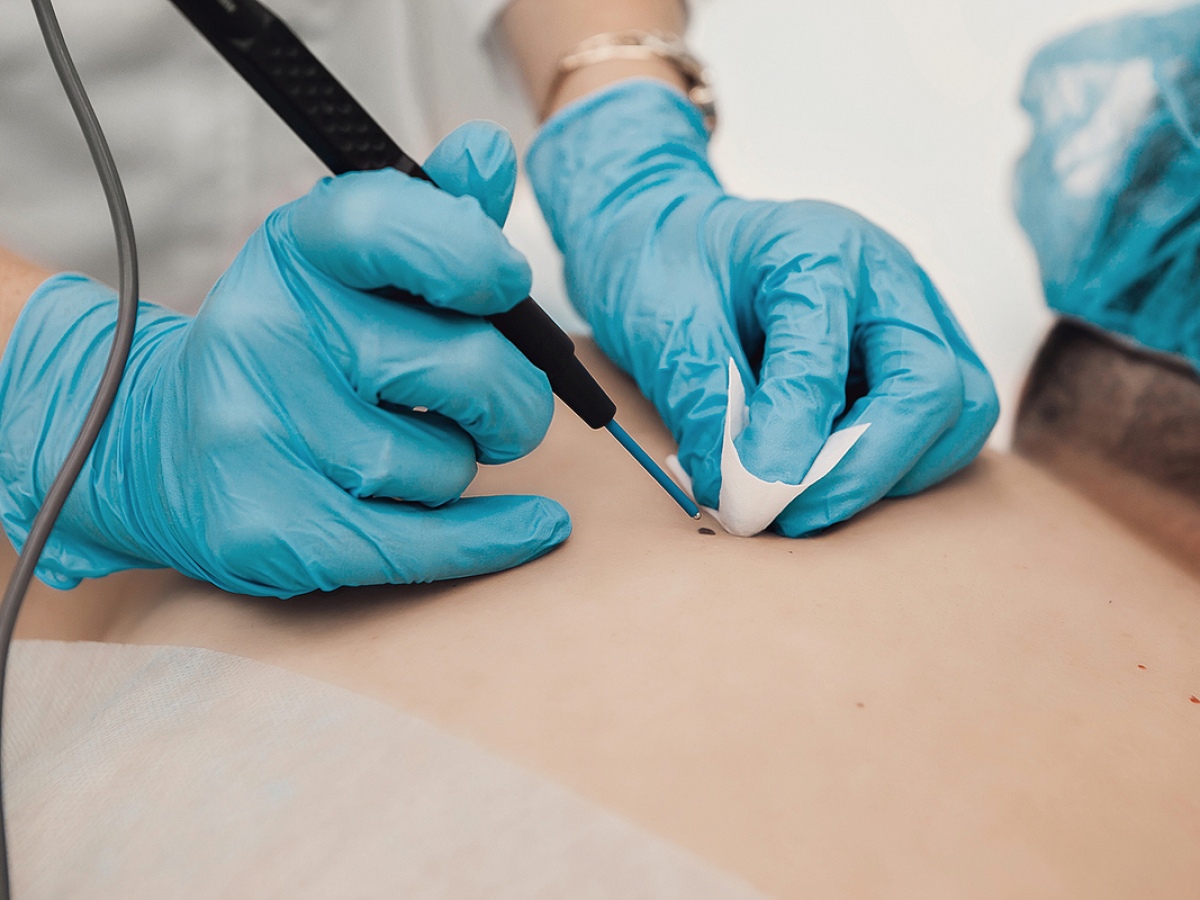
For patients seeking a biopsy test in Lahore, Dr. Ahmad Zia at IR Clinic successfully performs biopsies of various organs, including the stomach, lymph nodes, kidneys, testicles, and breasts.He is a qualified interventional radiology consultant with experience in minimally invasive procedures for the benefit of the patients. This article explains key differences between the Incisional Biopsy vs. Excisional Biopsy tests.
The need for a biopsy arises when results obtained from other investigations do not provide adequate evidence about what is going on inside the body. It might look like there is an issue by looking at the test results and scans of the body. However, without getting a sample of the tissue and analyzing its cellular components, it is impossible to understand the nature of this issue with any certainty.
For instance, during a stomach endoscopy, when there is a suspicion about a particular spot, taking a biopsy will enable the specialists to see if the cells are malignant, infected, or benign, and this finding becomes the basis for whatever treatment plan follows.
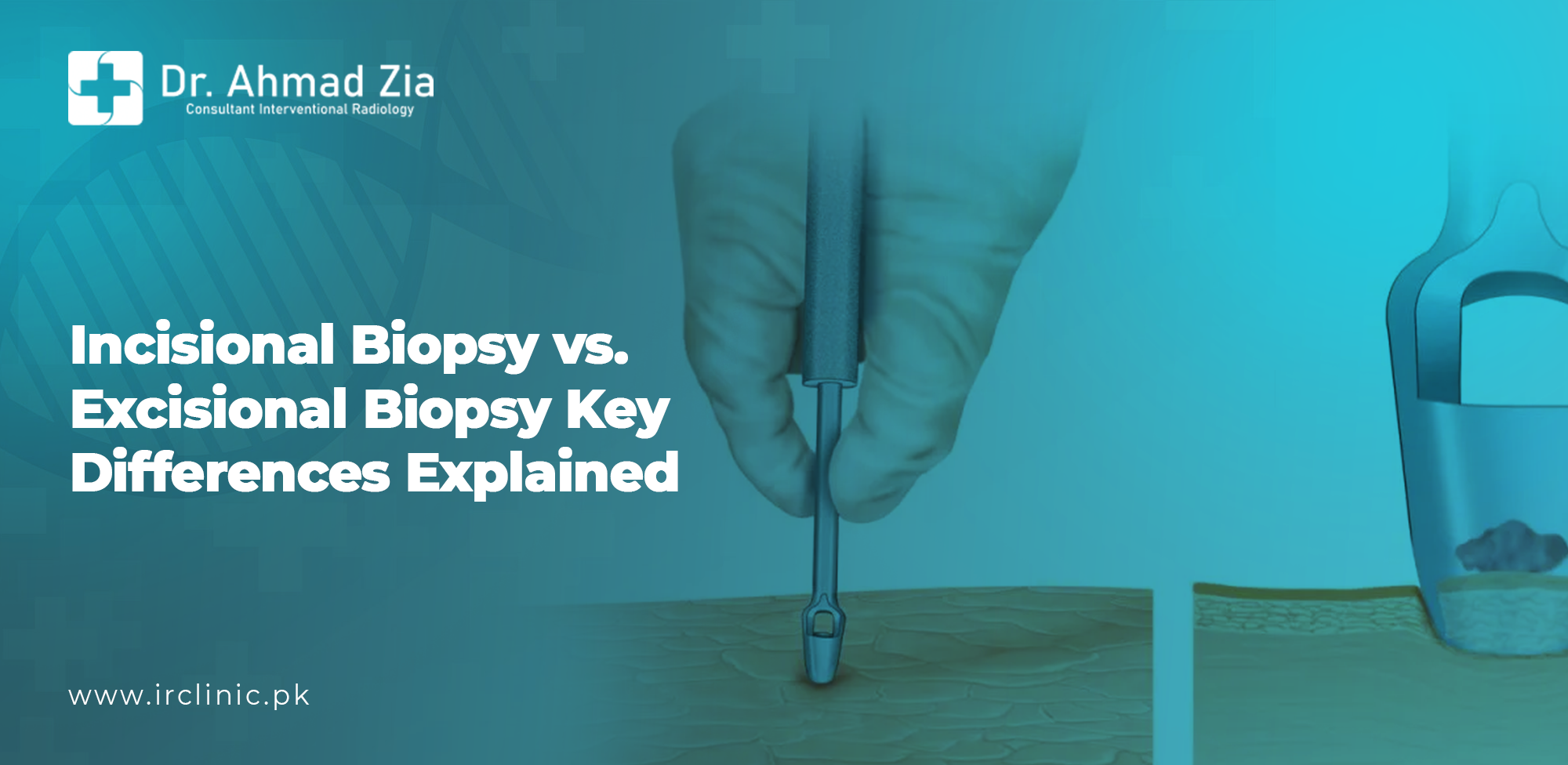
The incisional biopsy does not involve taking out the entire abnormal area but only a fragment. The physician either makes a small cut and removes a fragment of the abnormal tissue or employs the endoscopic biopsy to perform the same action using special forceps.
Incisional biopsy usually comes into consideration when there is a suspicion about a widespread or diffuse abnormality that cannot be easily removed due to various reasons.
For example, in case the lymph node tumor is extensive or deeply embedded, the medical specialists prefer to collect a small specimen first and draw conclusions based on their observations rather than to remove everything at once.
One of the greatest benefits of the incisional biopsy is the fact that it allows collecting diagnostic information fast and with minimal risk of complications.
This type of test is more comprehensive than the previous one. The physician does not extract only part of the tissue but removes the entire abnormality, along with a small amount of healthy tissue around it.
Such an approach provides a larger tissue sample for detailed analysis, which can be valuable when investigating liver tumor signs and diagnosis.
It is possible to apply this technique if the abnormal tissue is relatively small and accessible. If, during an examination of the liver with an endoscope, the physician spots a polyp, they will probably opt for its full removal.
This procedure has an advantage in that it achieves two goals at the same time. Firstly, it gives enough tissue for further analysis, and secondly, if the polyp turns out to be benign or early-stage, this problem is solved at once without the need for additional treatment.
As compared to other types of biopsies, this one takes a little bit longer because of more extensive tissue removal, and patients may need slightly more time to recover afterward. Even so, many find the trade-off worthwhile, since it often means fewer follow-up procedures down the line.
Get Advanced Biopsy Tests by Dr. Ahmad Zia at the IR Clinic in Lahore for Accurate Diagnosis and Successful Treatment.
While both techniques aim to obtain tissue samples for analysis, they differ when it comes to their extent, intent, and use. The table below breaks down the key differences at a glance.
| Factors | Incisional Biopsy Test | Excisional Biopsy Test |
|---|---|---|
| Tissue removed | Only a small area of the abnormal area | The entire abnormal area, plus a margin of healthy tissue |
| Main purpose | Diagnostic: Helps identify what the tissue is | Diagnostic and often therapeutic; may treat the tissue too |
| Best suited for | Larger, deeper, or hard-to-reach growths | Smaller, well-defined, easily accessible growths |
| Procedure time | Generally quicker | May take slightly longer |
| Invasiveness | Less invasive | Slightly more invasive |
| Recovery time | Minimal | A bit more than incisional, though still typically outpatient |
| Follow-up needed | Often used as a first step before further treatment decisions | May reduce the need for a separate treatment procedure |
Selection of Incisional Biopsy vs. Excisional Biopsy tests is not always done randomly. There are several factors that are considered by doctors when choosing the correct method. Among those factors are the size and location of the abnormality, its characteristics under imaging or endoscopy, as well as the health status of the patient.
When the abnormality is large or not clearly defined, an incisional biopsy will provide adequate data while posing minimal danger to the patient. If, however, the growth that is detected is small and well-defined, an excisional biopsy will be easier.
At times, incisional biopsy is performed first to determine the characteristics of the abnormal tissue, and based on the findings, the specialists can decide whether to perform an excisional biopsy or not. Once the appropriate technique has been decided, it helps to know what the procedure itself and the days that follow it actually look like.
It should be noted that most biopsies are generally done under local anesthetic or sedation, which means that there will be very little or no pain at all during the procedure. After the biopsy, mild discomfort and even minor bleeding can happen in the biopsy area; but this will only last for a few days, and patients are recommended to rest from heavy activities during this brief time.
It can take several days or even two weeks before the patient gets the results of their biopsy, depending on the complexity of the tissues being tested. Before biopsy results come back, feelings of anxiety are common; however, it should be remembered that a biopsy is just a test and not a diagnosis, since many biopsy results are non-cancerous or treatable diseases.
Incisional Biopsy vs. Excisional Biopsy tests are ways for doctors to have a better understanding of what happens inside the body. In an incisional biopsy test, there is an easy and simple way for doctors to get tissue samples for analysis. On the other hand, in an excisional biopsy test, doctors go one step further to remove all the abnormal tissues, and so treatment becomes part of it as well.
In cases where the problem arises in the stomach, specialists take into account the size, location, and risk involved before deciding on the right course of action. At IR Clinic, Dr. Ahmed Zia offers biopsy services for the diagnosis and treatment of various conditions with minimal discomfort to the patients.
He is an expert in both incisional biopsy and excisional biopsy tests. Knowing the difference between the two techniques can help patients feel far less anxious and far more informed when their specialists recommend a biopsy.